Cropped Circle
/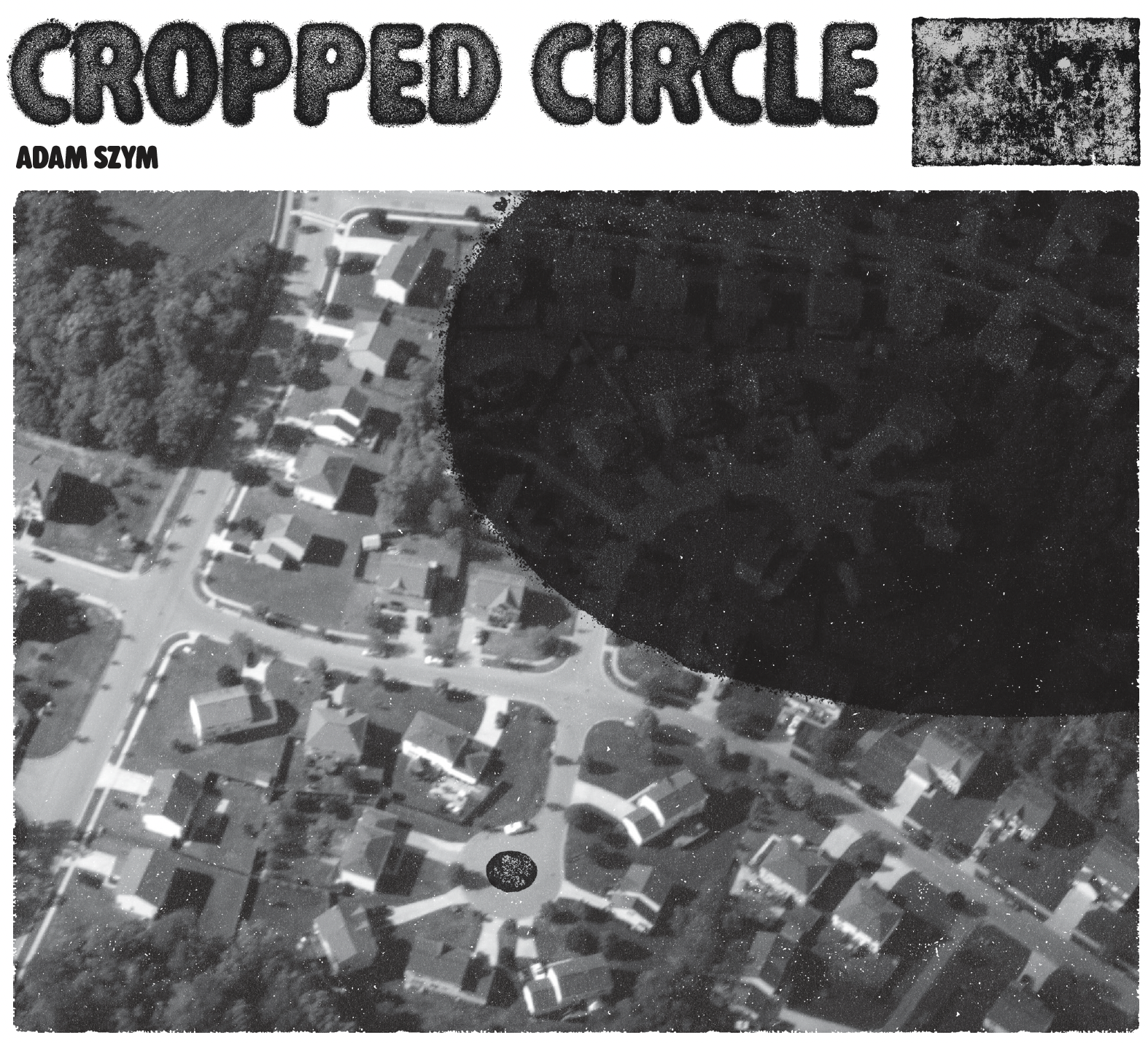
The patch of grass in the middle of the cul-de-sac wasn’t any different from the grass in his yard or his neighbor’s yards or any of the long stretches of grass which ran along either side of the winding roads of the development they lived in, but it was the only place it ever felt right to play, and ever since the ship arrived he couldn’t play there anymore.
The day before it came he had been out there digging for glass. He wasn’t supposed to do this. His parents had made it clear that collecting glass was something he could only do at the beach, where the constant churning of the waves would soften the edges of even the sharpest shards until he could run his finger clear around their corners and never feel a thing. But in the weeks following the fourth of July every year, when his parents and neighbors would have their loud drinking parties and invariably drop or throw a few bottles of beer, he couldn’t resist the shimmering fragments nestled in the grass, no matter how jagged they were. He was making the patch of grass safer to play in, he would tell himself. He was cleaning the cul-de-sac, not for himself, but for everyone. Yeah, that was it.
There was some truth to it. It was strange, to him, the way his parents and the other adults would change during their drinking parties. The way they would break their own rules and cross lines they wouldn’t cross any other time. Just a few nights before, he watched from his bedroom window as the grown ups stumbled away from the island where they’d spent the entire day drinking and barbecuing and setting off fireworks that hissed and snapped and kept him awake. One of the neighbors shouted that maybe they should clean the patch of grass up now instead of in the morning, and then his father had done the strangest thing. He had dismissed the neighbor with a single flailing wave and shouted, “Fuck it!”
Fuck it? His Dad, who mowed the lawn meticulously, who packaged the garbage and the recycling exactly according to protocol, who waxed his car like it was a part of his religion and sneered when he spotted drivers littering on the highway? Six beers was all that separated that familiar version of his Dad from this stranger shouting “Fuck it" and leaving a heap of trash out on the island shared by everyone in the cul-de-sac.
They did clean it the next morning, but still it startled him, and in the days that followed he found himself looking at his father differently. His usual behaviors and routines had a different color to them, now, a patina that altered every feeling his father gave him and had only just begun to fade. And anyway, they hadn’t cleaned everything, which is why the glass was there to be found.
So it was true that he was cleaning it, but if he’d been doing it for that reason alone the glass would have ended up in the trash. Instead he would take the day’s collections back to his bedroom overlooking the court of the cul-de-sac and deposit them in a gingham napkin, which he would then carefully fold up, and lower into the depths of his drawer.
That day his collecting ended early when the exact thing his parents had warned him about finally happened. As he knelt down to pick up a particularly shiny bit of Budweiser his finger caught the corner of it, and blood began to dapple the grass between his feet. He didn’t make a sound, but promptly turned on his heels, went inside, and dressed the wound himself without his parents noticing anything had happened at all. He didn’t go back outside. It was pizza night; they watched a game show he didn’t understand and which his parents spoke aloud to as if the host could hear them, and then he went to bed.
Sometime in the middle of the night he woke from a noise that he couldn’t be sure had been real. He lay there for a moment, trying to place the sound in time and space. His room yawned out around him, bigger at night than it was in the day. Before going back to sleep he opened his drawer, retrieved his flashlight, unfolded the napkin, and cast the light on the shimmering heap of glass. The light gleamed off of each fragment individually, a hundred little flares, and as his eyes grew heavy again he held tight to a quiet thought that they looked a lot like stars.
He awoke in the blue of dawn, and the ship sat steaming above the dewy grass in the middle of the cul-de-sac. From his open window he could hear it making the same little clicks and thumps that his father’s car made whenever they returned home from a drive. The sound of the engines cooling, the metal contracting, the ship settling in.
He sat there, dumbstruck, letting it fill his vision. It was hard to take in, and harder to describe. Every time he thought his eyes had a handle on it he would notice some new texture, or shape, or curve that snagged at his mind and pulled him back from the understanding he’d been so near to achieving, so that again and again he had to restart his attempts to absorb its image. He couldn’t discern if the ship itself was changing or simply his idea of it, and though he pushed this notion aside, a quiet part of him wondered if it might be him that was changing by being in its presence.
Days later he would no longer notice the changes, as in exhaustion his mind gave up on reckoning with any visual notion of what the object was. It became simplified, a compression of its reality, and thus finally took on a sort of rigid form. It became merely The Ship.
Slowly the neighbors drew aside their curtains, stepped outside to start their days, and began their own reckoning. They stayed clear of it at first, crossing to each other’s yards to talk excitedly, to speculate on it, to discuss what should be done. They moved laterally, yard to yard, circling the ship, doing everything they could not to approach it directly.
As he sat by the window watching them he heard the telltale sound of his parents rising from bed and starting their days. The morning shower, the shuffle of slippers, the making of coffee, the opening of the front door. Below him his father stepped onto the front walk, and promptly turned back to shout for his mother to come and see. The boy closed his eyes, clutched them, wishing this moment to disappear, begging for his mother not to see it. But the moment held, and his mother stepped outside, and joined the neighbors in their delirious clockwork patrol.
They circled it for hours, the furor of their speculation slowly ebbing, then quieting, until the entire neighborhood was orbiting the ship in complete silence. Their clothes soaked through with sweat, their shoes and slippers stained green from scraping through the dewy grass over and over. Their postures became limp, giving them the appearance of marionettes suspended from above, dangling at the pleasure of an invisible hand.
As the sun set the boy realized he hadn’t moved since the morning, that his hands were trembling, and that at some point he had peed his pants. Startled and ashamed, he got up and cleaned himself in the bathroom, changed his clothes, and returned to the window just as the sun went down and the streetlights came on.
The grown ups had stopped moving, and sat on the pavement in front of the ship, if there was a front to it, staring up at the man.
It was easier to think of him that way, as the man, than it was to try and understand him any other way. He stood before the ship in an elegant pose, and the boy thought he looked like a model in one of his mother’s old copies of Vogue magazine. He was naked, but not in the shocking way a human can be. His nudity was expected, somehow, like that of an animal, where the presence of clothes is more remarkable than the absence of them.
His arms were open at his sides and his skinny legs stood tight against each other, giving him the appearance of an arrow pointing up at the sky. The arms looked brittle, ungainly, the length between the shoulder and the elbow so much shorter than his long, gaunt forearms that it made the boy feel uncomfortable to look at them, as if too sharp a gaze might snap them in half.
His bare feet hardly touched the grass at all, and his huge empty eyes conveyed no more life behind them than the water at the bottom of a storm drain. Even so, the boy felt sure the man was looking right at him, but also right at his mother, and his father, and every other individual person sitting rapt with attention, waiting for some cue or signal or instruction.
And it came. The man lifted his hand with one long and thick-knuckled finger pointed up, and began to draw in the air. It wasn’t right to say that the grown ups followed along because there was no space between the moment the man raised his finger and they did. It was in perfect unison, as if the men and women sitting criss-cross applesauce in the darkness around the ship had rehearsed this performance for weeks beforehand.
They moved like an orchestra of conductors. As his finger danced, so did theirs, and together they scratched the man’s strange shapes into the night air. It was only his finger, though, that truly marked the darkness, as a visible wisp of icy thread came trailing behind it, evaporating before the boy had time to process the symbols being written.

The adults all sat there for hours in this way, in almost complete silence. Once in a while one of them would let out a startled sob which would pierce the quiet and then immediately swallow back inside of them as they regained their stony focus. At the end of one of the man’s string of runes the entire group let out an awkward barking laugh that ended just as soon as it began, and which woke the boy up from an accidental sleep in his seat by the window.
Eventually pale light began to spill from behind the hills in the distance and the man’s lecture finally concluded. The adults slowly rose, confused, filthy, their clothes stained with excrement and grass, their makeup smeared by tears, their skin burnt by the sun. They didn’t say anything to each other, but simply walked back to their homes and went inside.
The man stood for a moment longer, and the boy wondered if he too was confused, if he too had just awoken from some horrible reverie. And then the man was back in the ship, and the boy couldn’t have described how he entered it.
He heard the front door of his house open and close, and then his parents shuffle upstairs. Part of him ached to go to them, to open the door and run down the hall and launch himself into their arms and care for them, and be cared for by them. But there was too much he didn’t know, too much danger in their new behavior. He didn’t open his bedroom door, and instead leaned his desk chair against it so that the back of it tucked under the doorknob like he’d seen people do in movies.
He attempted to sleep, trying to convince himself that the fact that his parents were home meant that it was finally over. But as he lay in bed holding his eyes shut he became aware of a sound in the space with him, a background hum that made him want to grind his teeth and which could only be emanating from one place: the ship. It filled his room, touching everything, and as he lay there he imagined that it permeated not only his room but the entire cul-de-sac, the entire town, the entire state, the world. Maybe at that moment every human being alive was grinding their teeth from it. Maybe they would grind them and grind them until there wasn’t a person left with anything more than gums.
Restaurants would have to change their menus, he thought.
He gave up on sleeping and crept to his parent’s bedroom, assuming he would find them laying in their filthy clothes in the midst of a sleep that would last for days. But they weren’t in the bedroom. They weren’t in the bathroom, either, or the office, or anywhere on the second floor. They were downstairs in the kitchen, both of them dressed for work, drinking their coffee, and preparing breakfast. A bagel for him, yogurt for her.
They greeted him like it was any other morning, his father tossing out a “Look who decided to finally join us,” while his mother gave him a hug.
Their eyes were insane. Bloodshot and sunken, they gawked at him with a desperate eagerness, and when the boy managed to meet their gaze the words his parents were speaking fell away and all he could hear was: help!
He tried to stop them from leaving for work, tried to talk to them about the man and the ship, but whenever he did they would fling themselves into a nattering monologue about some neighborhood gossip, some problem at work, some issue at school. They overwhelmed him, and he gave up, and watched them walk out of the house with their crazed eyes and blotchy sun-stained skin, get into their cars, and drive off to the world of professional adults again.
He thought about calling the police, but wondered if they would decide that his parents and the other neighbors had done something wrong or illegal and arrest them along with the man. Once his father had been rear-ended on the highway and even though it hadn’t been his fault the policeman who arrived on the scene screamed at both drivers like they were equally guilty. The boy didn’t think much of policemen after that.
The only thing he could think was that he should tell his English teacher. She would know what to say, what to do, who to call. So the boy showered, got on his bike, and left for school. As he rode past the island and out of the cul-de-sac he looked at the ship. It was so much larger than it looked from his bedroom window, and was visibly filthy despite its shifting chameleon exterior. Looking at it, the boy felt the same impulse that people get when they stop to write “clean me” into the dust caked on a car window.
There was something else he saw: in his reflection on the hull of the ship the boy had the same huge and empty eyes as the man. He pedaled hard to get away from it.
At school his teacher took him aside and tried to calm him down. He was hyperventilating and talking a mile a minute, and she hugged him, and he felt so grateful for it especially because he knew that she probably wasn’t supposed to do that. It was hard to read her face as he explained what happened, but it felt like she took him seriously. It was some adult kind of concern he didn’t fully understand, one where you can sincerely believe someone and still think that what they are saying may not actually be true.
After school she drove to the cul-de-sac while he biked home, and the traffic leaving the school was such that for a few brief moments they were parallel to each other, and when he glanced at her she smiled back at him, and he felt sure everything was going to be okay.
He waited for her at the mouth of the cul-de-sac, and when her car pulled up it slowed to a crawl, and she stepped out of it without stopping, and the car rolled on for twenty feet or so, and she stared at the ship with her eyes agog, and began to walk around it like a one woman parade, and she didn’t hear any of his sobbing or his pleading, she was already gone.
The other adults came home from work, including his parents, and as the sun went down they all sat before the ship again as he cried by his bedroom window. The man arrived out of the ship in that way of his which didn’t make sense to the eye, and began to teach them shapes again. The boy’s teacher sat with everyone else, her finger moving in space. A student now.
In the days that followed he decided he wouldn’t bring anyone else there, that he couldn’t risk the ship swallowing them up like it did to his teacher. Every night was the same, and every morning his parents would walk inside, clean themselves up, and then leave the house. They never slept, that he could tell, and the boy wondered if they really went to work or went somewhere else instead, doing business for the man. If they did go to work he couldn’t imagine it would last much longer, as they looked so hideously awful he thought they would surely get fired before long.
In the days that followed more people did come to the cul-de-sac. Postmen and delivery drivers out on their routes. Friends and family of his neighbors popping by for a visit, or checking in out of concern after not hearing from them for days. They all became part of the man’s congregation.
He continued to go to school, at first, in large part for the food, as the kitchen became more and more bare at home. But he hated seeing his English teacher in the halls, and when he went to her class she spent the entire session staring at him with the same frenzied and pleading eyes his parents had. Once, while she was writing something about Balto on the board the chalk fell from her hand and her finger began to draw the man’s shapes, her nail screeching against the blackboard’s surface. A day after that she “took a vacation,” according to the substitute, but that night she was back at the cul-de-sac again.
He watched the ship for another week or so, but every night he sensed the man’s gaze on his window more distinctly, more pointedly, than the night before. He decided to stop watching. What was there to gain, what information was there to learn? It was the same every night, to the point that he probably could have made the marks with his finger himself if it didn’t make him nauseous to even consider it.
One night he stood in front of the television holding the remote out before him, and felt a sharp pang of guilt for even considering entertainment. But when he turned the TV on the screen flickered and there they were: his parents and neighbors and teacher, live on television, sitting before the man. After a few seconds the screen flashed again and he was looking at his own bedroom window from outside. The boy barely reacted, exhausted by it all, and simply turned the TV off and went to bed.
Before he even woke he felt the end of his bed sinking, and knew that when he opened his eyes he would see the man sitting there. He suspended his breath in his mouth, willing it to float there for fear that when it left his lips he would be heard. He kept his eyes shut, but was careful not to clench them. His sleep had to appear natural, normal, there could be no impression that he might secretly be awake.
He could hear the man breathing, and the first thing that came to his mind was that it sounded like the breath of the horses he had met at a petting zoo once: weighty and substantial and labored. With no sense of how much time was passing the quiet of the room expanded in his senses and he was able to hear another sound beyond the breathing. A light scraping accompanied by an almost imperceptible tinkling. He knew what it was, and finally opened his eyes.
There the man sat, bent over in his enormity, the bed folding under and around his weight. Moonlight beamed onto his mottled and pallid skin, paper-thin, and though the boy had never seen the man wearing clothes it was only now that he really felt the bare extremity of his nakedness.
There would have been a feeling of filthiness in knowing that his naked rear end was touching the boy’s bedsheets, but the man’s skin gave a sense of almost obscene cleanliness, as if it had been washed and scrubbed to its absolute limit. As if one more wipe of the washcloth would have split it, spilling all of his insides out onto the floor in a cascading flow.
The man held the napkin full of glass in his huge palm, and pawed at the multicolored shards with his other hand like he was looking for a particular piece, or sifting for something he had lost. The glass made a delicate plinking sound that gave the boy a sense of the moonlight sparkling off of the fragments even though he couldn’t see it.

The man didn’t speak, but the boy found a question suddenly laying in the middle of his mind like a package left on a doorstep:
why do you stay here every night? why do you not come out and join your family? your neighbors?
The boy caught his breath again, his body clutched in an uncomfortable rictus. After a moment, he replied without really deciding to do so.
“It’s not nice to do what you’re doing…it looks like it hurts. They smile but they’re not having fun.”
fun.
“Yes…”
The man’s hands froze for a moment, and he turned his head just enough that the boy could see the corner of one enormous black eye.
you are correct.
The boy didn’t reply. He was too lost in the eye, the bottomless black of it, and his own reflection within it: curled uncomfortably on his side in a swirl of bedsheets, like a drop of milk suspended in the quivering density of spilled oil.
The man turned back and began to rake through the glass again. The boy felt the emptiness of the space, the oppressive silence building within it, and suddenly felt that he had to say something or else his entire bedroom might burst. He meant it to sound like an offer, but instead it came out like begging:
“You can keep them, if you like them! The glass. You can take them with you…when you go.”
The man looked down at the glass, and appeared to consider this. Without delivering another thought he raised his hand with his thumb and forefinger pinched together. Slowly the fingers pushed away from each other as a pearlescent shard of shimmering glass expanded from between them like it was grown from the skin itself.
Standing there between his fingers the glass made a distant sound, like a rushing wind. The man gently placed the shard into the napkin, folded it, and left the napkin on the bedside table.
He stood up, and the boy sank himself deeper into the bed in anticipation of what would come. But the man simply turned his huge frame, stooping under the ceiling, delicately stepped to the door, and squeezed himself through it.
The room had never looked larger, the air inside it never more abundant. There was no way he could go back to sleep, it was impossible, and yet he did.
He woke to screaming outside his house. Not the screaming of a single voice, but dozens of voices. Terrified, he crept to the window on his knees, and slowly rose to look.
There were his neighbors, every single one of them, out on their lawns and the sidewalk and the street, howling in agony. On their knees, lying prone, punching the dirt, pulling out their hair. They sobbed and screeched and moaned in pain, and the boy couldn’t tell if it was purely emotional or physical as well. He looked down by his front door and saw his parents, there, shrieking with everyone else.
The island in the middle of the cul-de-sac was empty. The ship was gone.
As the day went on the screaming outside became hoarse, and then quieted, and eventually stopped. As the sun set his neighbors slowly began to rise, one by one, confused and frightened. They dusted themselves off and helped each other up and went back into their homes.
In the days that followed it became clear that none of them remembered anything about the time that the ship had been there, and could not or would not recognize this gap in their cognizance. The boy didn’t push it. He was too exhausted to make his parents understand, and allowed himself to bask in the pleasure of their normalcy.
As time went on he could never decide if they seemed different. He thought they must have changed, even if he could never put his finger on how. Over the years he would watch them sometimes, when it came to mind, and would try to spot something. Some quirk that hadn’t been there, some new way of moving or talking or thinking, but none of it ever felt big enough to point to and feel satisfied. Never clear cut enough to know that he wasn’t simply seeing them differently because he was growing. Because he knew more about them, and knew more about the world.
It wasn’t until he got older and arrived at the age that they had been when the ship had landed, that he noticed differences which felt as large as he had imagined they should be. But by then there was no way to know if they were any different from the changes you’d expect out of people growing old, and bitter, and strange.
Sometimes he wondered whether the ship, or ships like it, might have visited other places at other times. Whether other children like him had sat paralyzed as their entire world was subsumed by something they could never hope to understand. Once he was watching TV and saw something that reminded him of those horrible weeks: a politician speaking in a crowded hall, his voice casual, confident, charming, but his bloodshot eyes radiating with the same desperation that the boy had seen on his neighbors, and teacher, and parents.
Much later, when his father’s gasps made weird rhythms with the beeping of the machines that were keeping him alive, he thought he saw his dad’s finger stretching out and tracing the same shapes the man had made in the middle of the cul de sac. But even then he couldn’t be sure, because the boy had become too old to remember the exact curves, the correct recipe of lines that he had watched them draw in the cool night air across from his bedroom window.
On his birthday a few months after the ship’s departure his father bought him a rock tumbler which he could use to turn the raw-edged bottle glass he had collected into something closer to sea glass. The boy had no idea that his parents were aware of his collection, and when he understood what the gift was he cried hysterically, and his mother and father didn’t understand why. Through the years he continued to collect glass, and still used the same tumbler to soften their edges when needed. When he eventually inherited his parent’s house he had the front path redone so that it was pebbled with glass from his collection. One day while walking up the path after work he stopped, caught in his senses, hearing something familiar but difficult to place.
If you were one of his neighbors and you had looked out your window and across the cul-de-sac at that moment you would have seen the boy, now a man, on his knees in his front yard, his ear against the foot path. Listening to the rushing wind of some other place entirely.
But that was all so much later, wasn’t it? Too far away to be real. As distant as the stars. For now the boy was just happy he could play on the grass again.